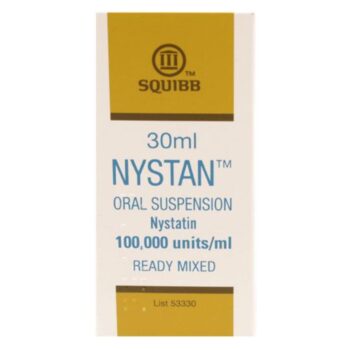

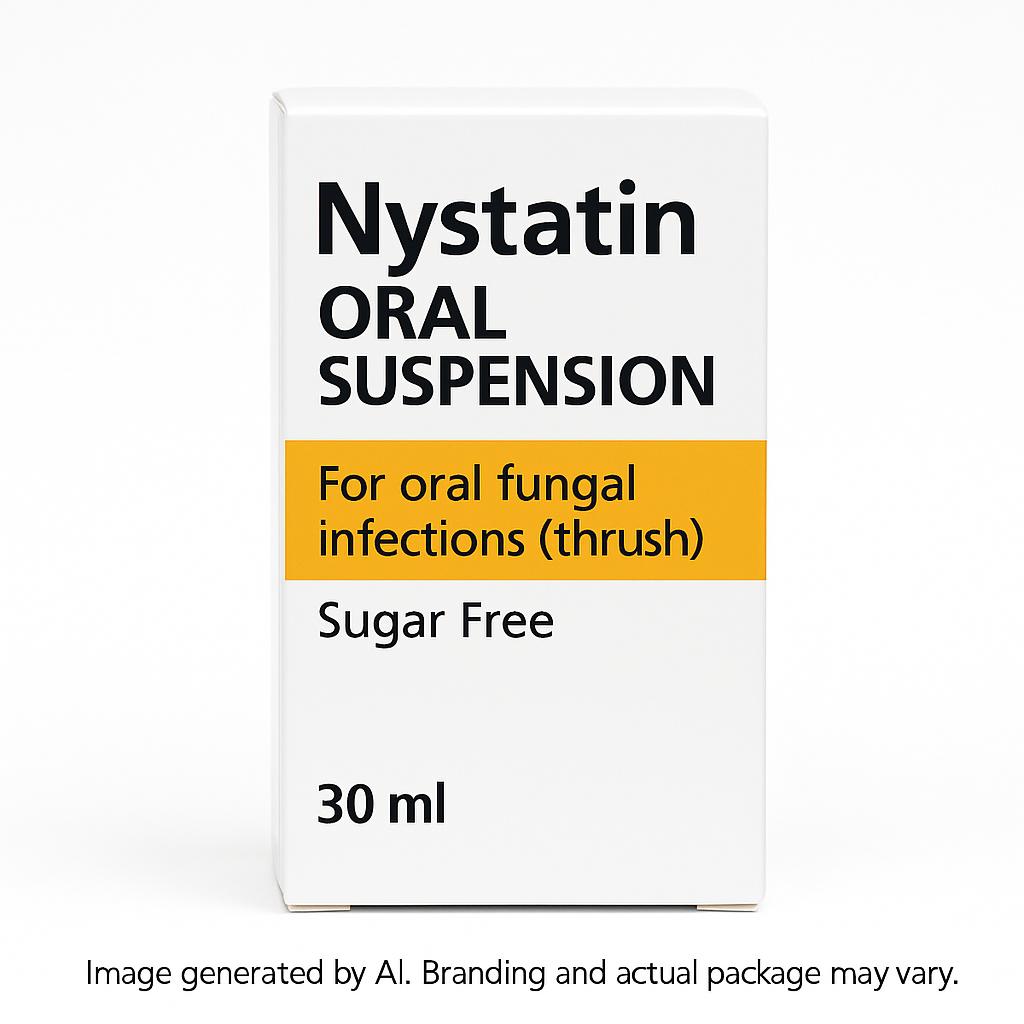
What is Nystatin Oral Suspension?
Nystatin Oral Suspension is a prescription antifungal medication used to treat and prevent fungal infections of the mouth, throat, and gastrointestinal tract. It is particularly effective in managing oral candidiasis (thrush), a common yeast infection caused by Candida species. This condition frequently affects infants, denture wearers, people taking antibiotics, and those with weakened immune systems due to illnesses or treatments like chemotherapy.
The suspension contains the active ingredient nystatin, which works by binding to the fungal cell membrane, disrupting its structure and causing the contents of the cell to leak out. This kills the fungal cells and prevents them from multiplying further. Because Nystatin is not absorbed into the bloodstream when used orally, it acts locally in the mouth and gastrointestinal tract, offering a high level of safety with minimal risk of systemic side effects.
Nystatin Oral Suspension is designed for direct application in the mouth. Patients are usually advised to swish the suspension around in the mouth for as long as possible before swallowing. This ensures thorough contact with affected areas, maximising the antifungal effect. It’s typically taken several times a day — often four times daily — for at least 7–14 days, or as prescribed by your doctor.
It is suitable for use in both adults and children, including infants, under medical supervision. In babies, it is often administered using a dropper or by applying the medicine gently to the inside of the cheeks, tongue, and gums using a clean finger or cotton bud.
Nystatin Oral Suspension is frequently prescribed in cases where the natural balance of microorganisms in the mouth has been disrupted, such as after a course of broad-spectrum antibiotics, or in patients undergoing chemotherapy or immunosuppressive treatment. It may also be used preventively in individuals who are at higher risk of fungal infections due to long-term illness or medical devices like dentures.
As with all medications, it is essential to complete the full course of treatment even if symptoms begin to improve within a few days. This helps prevent recurrence and ensures the infection is fully resolved. Follow your healthcare provider’s instructions closely for the best results.