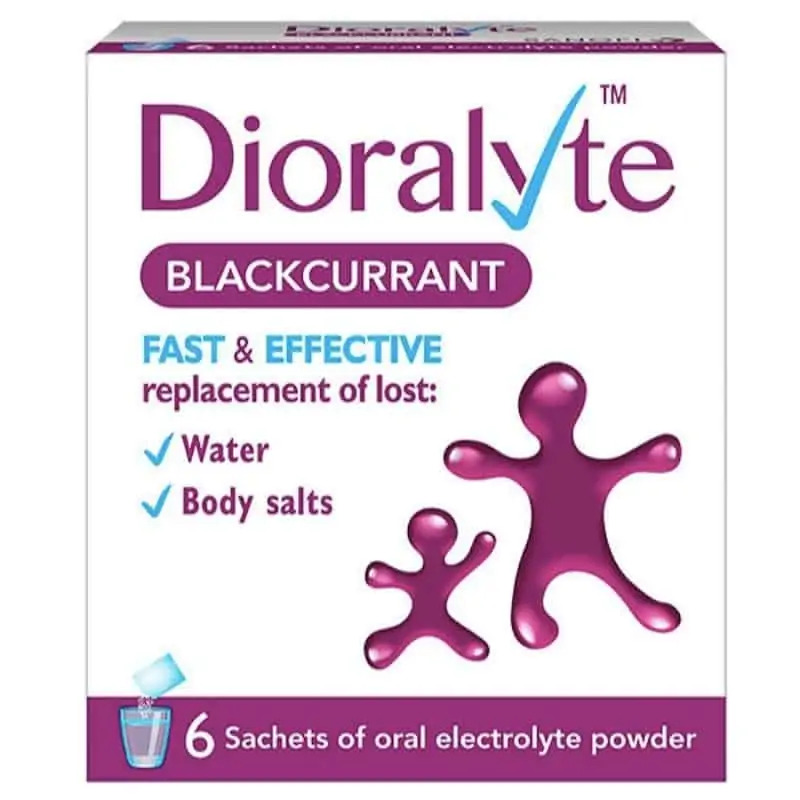
Dioralyte Blackcurrant is formulated to treat and prevent dehydration caused by acute diarrhoea in infants, children, and adults. Each sachet contains a balanced mix of glucose and electrolytes, including sodium chloride, potassium chloride, and disodium hydrogen citrate, which work together to quickly restore the body’s fluid and electrolyte balance. The pleasant blackcurrant flavour makes it palatable for all age groups.
- Fast and effective rehydration
- Replenishes essential electrolytes
- Suitable for the whole family
Ingredients
Active ingredients per sachet:
- Glucose: 3.56g
- Sodium Chloride: 0.47g
- Potassium Chloride: 0.30g
- Disodium Hydrogen Citrate: 0.53g
Other ingredients:
- Colloidal anhydrous silica
- Saccharin sodium
- Blackcurrant flavour
Side Effects
Possible Side Effects:
- Allergic reactions such as rash, swelling of the lips, face, throat, or tongue, and difficulty breathing.
If any side effects occur, discontinue use and consult a healthcare professional.
Please note that Dioralyte Blackcurrant is intended for oral use only and should not be administered intravenously.