

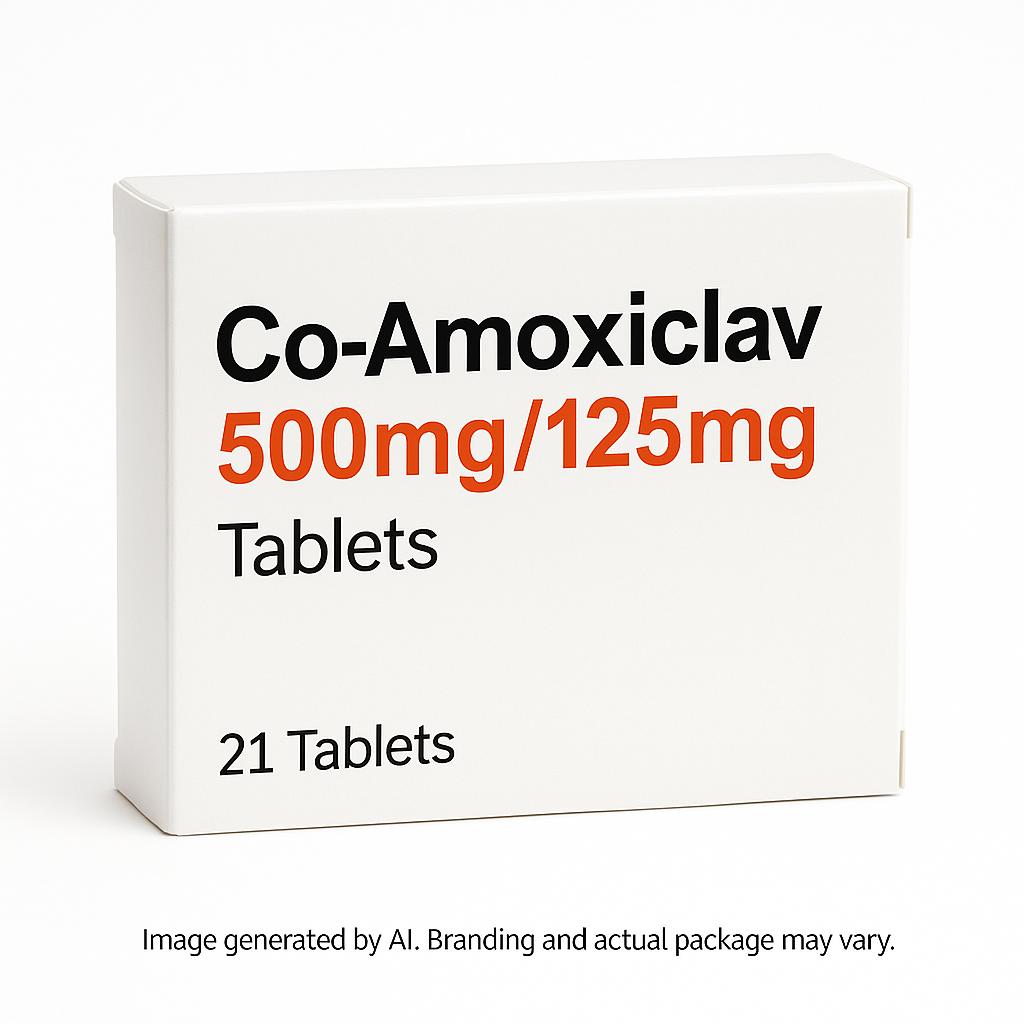
What is Co-Amoxiclav?
Co-Amoxiclav is a prescription-only, broad-spectrum antibiotic used to treat a wide variety of bacterial infections. It combines two active ingredients: amoxicillin, which belongs to the penicillin group of antibiotics and works by killing bacteria, and clavulanic acid, which prevents bacteria from inactivating amoxicillin through an enzyme called beta-lactamase. Together, this combination allows the treatment to work against a broader range of bacteria than amoxicillin alone.
This medicine is commonly prescribed to treat respiratory tract infections such as bronchitis, sinusitis, and pneumonia. It is also effective for urinary tract infections (UTIs), skin and soft tissue infections, dental infections, and middle ear infections. Because of its enhanced action against resistant strains of bacteria, Co-Amoxiclav is often used when initial antibiotic treatments have failed or when there’s a high risk of resistance.
Co-Amoxiclav is usually taken as a tablet, typically every 8 or 12 hours, depending on the formulation and severity of the infection. The duration of treatment can vary from a few days to several weeks, depending on the site and nature of the infection. It is important to follow your doctor’s instructions precisely and complete the full course—even if symptoms improve early—to ensure the infection is fully treated and to reduce the risk of antibiotic resistance.
The medicine is suitable for use in adults and children, with dosage adjusted based on weight, age, and kidney function. For children or those unable to swallow tablets, liquid formulations are available. It is usually recommended to take each dose at the start of a meal to improve absorption and reduce the chance of stomach upset.
Side effects can include nausea, diarrhoea, and skin rash. In rare cases, allergic reactions such as hives or swelling may occur—particularly in those with a known penicillin allergy. Inform your healthcare provider of any past reactions to antibiotics before starting treatment.
Co-Amoxiclav is an important tool in modern medicine for treating infections that would otherwise be difficult to manage. Always use it as directed and consult your doctor if you have any concerns or if symptoms persist.